
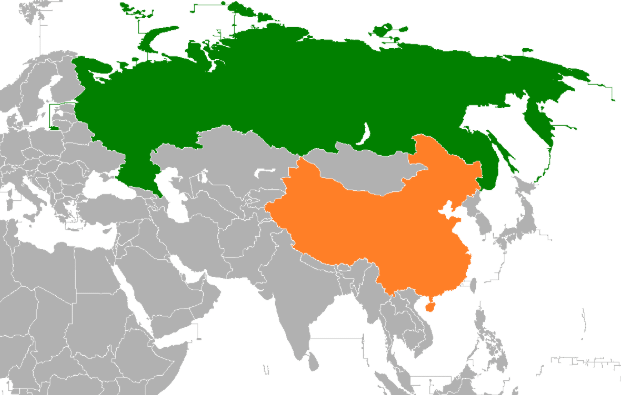
February 4, 2022. Twenty days before Russian tanks crossed into Ukraine, Vladimir Putin and Xi Jinping stood together in Beijing and signed a joint statement declaring a partnership with “no limits.” Western analysts largely dismissed it as theater. Diplomatic posturing. The kind of language that sounds grand in a press release and means little in practice.
They were wrong.
In the weeks and months that followed the invasion, Western governments and analysts made a series of confident predictions. Russia’s economy would collapse under the weight of unprecedented sanctions. Its military, exposed as brittle and poorly led, would culminate within months. Isolated from Western technology and capital, Russia would be forced to the table. The assumptions were not unreasonable given the tools being deployed. They were wrong on almost every count.
What stopped the collapse was China. Not through a formal military alliance, not through dramatic public declarations, but through the quiet, sustained, and systematic provision of everything Russia needed to survive economically and remain competitive militarily. Energy customers replaced. Financial architecture rerouted. Technology supply chains rebuilt. The “no limits” declaration turned out to be less diplomatic theater than operational blueprint.
What has unfolded since is not simply a bilateral relationship between two governments. It is the construction of an alternative global architecture, one built on Russian resources and geographic depth on one side, and Chinese capital, industrial capacity, and financial infrastructure on the other. Together, they cover each other’s structural weaknesses in ways neither could achieve alone. Combined, they are actively building the plumbing of a world order that does not run through Washington.
This article is about how that architecture works, what it has already produced, and why the West has no clean answer to it.
* * *
I. The Energy Architecture
To understand the weight of what Russia brought to this partnership, start with a single number: approximately 150 billion dollars. That is the annual European energy revenue Russia lost almost overnight after February 2022. Decades of pipeline infrastructure, long-term supply contracts, and carefully cultivated customer relationships, severed by sanctions and political will in the span of months.
Russia needed a replacement. China was ready, and it negotiated accordingly.
The groundwork had been laid years earlier. The Power of Siberia 1 pipeline, a 400 billion dollar project connecting Siberian gas fields to northeastern China, had been in negotiation for nearly a decade before a deal was finally signed in May 2014. The timing was not coincidental. Russia’s annexation of Crimea had just triggered the first round of Western sanctions. China’s outside options had suddenly improved dramatically, and Beijing closed the deal at pricing that reflected that advantage. The leverage was established before a single cubic meter of gas flowed eastward.
Post-2022, that dynamic intensified at scale. Russian Urals crude traded at discounts of 30 to 35 dollars per barrel below Brent at points in 2022 and 2023. Russia was a motivated seller with no alternative customer base. China absorbed the supply at crisis pricing, feeding its industrial base with discounted energy while Russian soldiers were dying in Ukraine partly funded by the revenue those discounts compressed.
The Arctic dimension adds another layer. Russia’s Yamal LNG and Arctic LNG 2 projects were designed with both European and Asian markets in mind. Western sanctions froze out Western technology, financing, and insurance. China stepped into the gap. Chinese state energy firms hold equity stakes in Yamal. Chinese icebreaker technology and financing have become load-bearing components of Arctic development. Sanctioned Russian LNG cargoes have been arriving in Chinese ports, a quiet signal that the two countries are moving to challenge American LNG dominance in Asian markets simultaneously.
The Power of Siberia 2 pipeline, which would route an additional 50 billion cubic meters annually through Mongolia into western China, remains under negotiation. Russia and Gazprom signed a memorandum in September 2025 that Moscow describes as legally binding; Beijing has not confirmed that characterization, and price terms remain unresolved.
For Russia, the return on this energy relationship is not simply survival. It is hundreds of billions of dollars in revenue that replaced what Europe cut off, flowing into state coffers that fund both the war and the broader economy. It is Chinese financing and technology unlocking Arctic and Siberian reserves that Russia could not develop alone. It is a customer so large and so committed that Russia’s energy sector, far from collapsing under sanctions, has remained the financial backbone of the Russian state throughout the war.
Across the former Soviet south, a complementary division of labor has taken shape. Central Asian states like Kazakhstan and Turkmenistan are deeply economically integrated with China, their energy exports flowing east through Chinese-built infrastructure on Chinese-negotiated terms. Russia maintains its military relationships and security footprint in the same countries. The arrangement is less rivalry than coordination: China provides the economic gravity, Russia provides the security architecture, and both benefit from a region that remains outside Western-led institutional frameworks.
For China, the strategic return on this energy architecture extends beyond cheap inputs for its factories. Russian pipeline routes reduce China’s exposure to one of its most significant strategic vulnerabilities: the Strait of Malacca. Approximately 80 percent of China’s oil imports pass through that chokepoint, which the United States Navy could interdict in a conflict scenario. Overland energy flows from Russia and Central Asia represent a partial but meaningful hedge against that vulnerability. Energy security that does not depend on sea lanes the US controls is energy security of a qualitatively different kind.
* * *
II. The Resource Axis: Beyond Oil and Gas
The energy story is the most visible layer of the Russia-China resource relationship. It is not the only one.
Russia holds some of the world’s largest deposits of critical minerals: nickel, titanium, cobalt, palladium, and a range of rare earth elements that sit at the foundation of the next technological era. These are the materials that go into electric vehicle batteries, semiconductor fabrication, advanced weapons guidance systems, and the defense supply chains that Western governments are now scrambling to secure.
China, meanwhile, controls approximately 85 to 90 percent of global rare earth refining capacity. It dominates not just the mining of these materials but the processing infrastructure that converts raw ore into usable industrial inputs. This is a chokehold on supply chains that the United States, European Union, and their allies have spent years trying to work around, with limited success.
The Russia-China axis combines Russian deposits with Chinese refining dominance. It is a resource partnership that spans the materials underpinning the entire next wave of technological and military competition. As Western governments invest heavily in onshoring semiconductor manufacturing, building domestic battery supply chains, and reducing rare earth dependence on Beijing, they are doing so while Russia and China already have the partnership that makes those alternatives unnecessary for them.
This dimension rarely receives the attention it deserves in analyses of the Russia-China relationship, which tend to focus on the immediate drama of the Ukraine war. The rare earth and critical mineral axis is slower-moving and less telegenic. It is also, in the long run, potentially more consequential. The country that controls the materials of the next technological era exercises a form of structural power that does not require military force to project.
* * *
III. The Financial Architecture
When Western governments moved to cut Russia off from the SWIFT international payments system in February 2022, it was described as a financial nuclear option. The assumption was that exclusion from the dominant global payments infrastructure would be crippling, possibly fatal to the Russian economy’s ability to function internationally.
China had been building the alternative for years.
The Cross-Border Interbank Payment System, known as CIPS, was launched in 2015. Its stated purpose was to facilitate yuan-denominated international transactions. Its strategic purpose, understood by everyone involved, was to create a payments architecture that could function independently of Western financial infrastructure. After 2022, it became operationally critical.
The numbers shifted dramatically. In 2021, yuan-denominated settlement was a small fraction of Russia-China bilateral trade. By 2023, estimates placed yuan and ruble settlement at approximately 90 percent of all Russia-China transactions. Bilateral trade itself reached approximately 240 billion dollars in 2023, a record, and continued expanding into 2024 and 2025. Russian commercial banks began offering yuan deposit accounts. The Moscow Exchange integrated yuan as a primary trading currency. Russia’s central bank increased yuan holdings as Western currency reserves were frozen.
The significance of this extends well beyond the bilateral relationship. Russia became a proof of concept for dollar-independent trade at scale. Every government in the Global South watching the Russia sanctions episode received a clear demonstration: if a country of Russia’s size could be cut off from the dollar system, so could anyone. And if Russia could continue functioning economically through yuan settlement and CIPS, so could others.
The BRICS expansion that followed is not coincidental. Saudi Arabia, the UAE, Iran, Egypt, Ethiopia, and others joining the bloc brings together countries that collectively represent a substantial share of global energy exports, manufacturing capacity, and population. The financial architecture that CIPS represents, the political coalition that BRICS represents, and the resource base that Russia and China anchor together constitute the plumbing of an alternative order. Each component reinforces the others.
There is an asterisk worth acknowledging. The yuan is not freely convertible. China maintains tight capital controls, which means yuan-denominated reserves cannot be deployed with the same flexibility as dollar reserves. Russia has accumulated yuan holdings it cannot fully invest globally. But this limitation is less constraining than it appears, because China’s industrial depth means that a very large share of what Russia needs to import can be sourced from China directly. When your primary trading partner is the world’s largest manufacturer, the inability to freely move currency elsewhere matters less than it would otherwise.
* * *
IV. The Technology Lifeline
In the early weeks of the Ukraine war, Western analysts and policymakers made a prediction: export controls on semiconductors, machine tools, and advanced technology would degrade Russia’s defense industrial capacity within months. Artillery production would slow. Precision munitions would become scarce. The Russian military machine, dependent on Western components it could no longer access, would grind down.
That prediction was wrong, and China is the primary reason why.
Beijing made a deliberate and sophisticated calculation. It would not directly supply Russia with weapons bearing Chinese military markings. That threshold, if crossed, would trigger secondary sanctions severe enough to meaningfully damage Chinese access to Western markets and technology. The line was held. But everything adjacent to that line was made available.
Drone components: the motors, flight controllers, cameras, and batteries that Russian forces assemble into first-person-view attack drones at industrial scale are overwhelmingly Chinese-made, routed through networks of intermediary companies in third countries. Artillery shell components and propellant precursors flowed through similar channels. Machine tools essential for weapons manufacturing, the kind that Western export controls specifically targeted, were replaced with Chinese equivalents. Optical and navigation equipment, microelectronics that end up in Russian missile guidance systems, commercial vehicles that became the backbone of Russian military logistics, Huawei networking equipment documented in Russian military communications infrastructure: none of it bears the fingerprints of a formal arms transfer. All of it kept the Russian war machine running.
The result was a production outcome that stunned Western defense establishments. At peak, Russia was producing artillery shells at a rate exceeding the combined output of all NATO member states. A statistic that would have seemed impossible in February 2022 became operational reality by 2023 and 2024. The Western assumption that export controls would create an insurmountable production gap was falsified by Chinese industrial supply chains filling precisely that gap.
The implications run deeper than the Ukraine war. This episode demonstrated, in live conditions, that a major power under comprehensive Western sanctions can sustain high-intensity industrial warfare indefinitely, provided it has access to Chinese manufacturing capacity. That is a data point every future sanctions designer, and every future potential sanctions target, has now internalized.
* * *
V. The Strategic Dividend
Step back from the individual components and the strategic picture becomes clear. Russia and China are not simply helping each other survive. They are, through the combined weight of their partnership, systematically working around every major tool the West has historically used to enforce the global order it built after 1945.
Dollar dominance: being routed around through CIPS and yuan settlement, with the BRICS bloc providing the political coalition to accelerate adoption.
Export controls and technology denial: being neutralized by Chinese industrial supply chains that replace what Western sanctions remove.
Energy leverage: inverted, with Russia now dependent on China rather than Europe dependent on Russia, but the net effect being a resource axis that feeds Chinese industrial power independently of Western supply chains.
Military superiority: being stretched thin across multiple theaters simultaneously, with consequences that are measurable and significant.
That last point deserves particular attention. The war in Ukraine has drawn down American and NATO military stockpiles that took decades to accumulate. Stinger man-portable air defense missiles, 155 millimeter artillery shells, Patriot interceptor missiles, Javelin anti-tank systems: the consumption rates in Ukraine exceeded Western production capacity for extended periods. Reconstituting those stockpiles is measured in years, not months. Simultaneously, the Iran theater has placed additional strain on Patriot interceptor inventories specifically, at a moment when those same systems would be critical in any Taiwan contingency.
Every European NATO member state is now focused primarily on its eastern flank. Defense spending is rising across the continent, but it is oriented toward deterring Russia, not supporting American commitments in the Pacific. Every euro spent fortifying Poland’s eastern border is a euro not pre-positioned to support a Taiwan scenario. Every American political and diplomatic bandwidth unit consumed managing the Ukraine conflict is bandwidth not available for Pacific strategy.
China is watching all of this carefully. The Taiwan decision calculus is partly a function of windows: when is American military capacity most stretched, most politically distracted, most depleted. The Russia-Ukraine war creates a window of a kind that would not exist without it. Whether China intends to use that window in the near term is a separate question. That the window exists, and that China is aware of it, is not seriously in dispute among serious analysts.
The Trump administration’s attempt at a so-called reverse Kissinger, inviting Russia toward a separate accommodation with Washington in Alaska, was an acknowledgment of exactly this dynamic. The original Kissinger move in 1972 drove a wedge between China and the Soviet Union, reshaping the Cold War balance. The logic of reversing it, peeling Russia away from China to simplify the Pacific challenge, is strategically coherent. It has not worked, because Russian and Chinese interests are currently more aligned than any inducement Washington has been willing or able to offer. Russia would require sanctions relief, security guarantees, and territorial recognition that Washington cannot politically deliver. China would need to offer Russia nothing and lose its most strategically valuable partner. The arithmetic does not work for a wedge.
* * *
VI. The Architecture of an Alternative Order
Taken individually, each component of the Russia-China partnership can be analyzed as a bilateral arrangement with specific terms and limitations. Taken together, they describe something larger.
The energy axis provides the resource backbone: discounted Russian hydrocarbons feeding Chinese industry, Central Asian energy flowing through Chinese infrastructure, Arctic development financed by Chinese capital. The financial architecture provides the plumbing: CIPS as the payments system, yuan settlement as the dollar alternative, BRICS as the political coalition organizing around both. The technology and industrial relationship provides the manufacturing engine: Chinese supply chains sustaining Russian war production, dual-use technology transfers keeping Russian defense capacity functional. And Russian military power provides the strategic distraction: keeping Western attention, resources, and military capacity fragmented across the European theater while China operates with reduced scrutiny in its own region.
Each component reinforces the others. The energy revenues fund the war. The war pins down the West. The pinned-down West cannot focus on containing Chinese power. Chinese industrial capacity sustains the war. The cycle is self-reinforcing in ways that make it structurally durable regardless of what happens in any individual negotiation or conflict.
Two major powers whose complementary strengths fit each other’s structural weaknesses have built, under the pressure of Western sanctions and strategic competition, an interlocking set of economic, financial, and military arrangements that collectively challenge the foundations of Western-led global order. They do not need to trust each other deeply for this to function. They need the partnership to be more valuable than the alternative. For both, at this moment in history, it clearly is.
The “No Limits” declaration of February 2022 was signed as a geopolitical signal. What it has become is closer to an architectural blueprint. The West dismissed it as theater. The more accurate read, visible now with the benefit of four years of evidence, is that it described a convergence that was already underway and would only deepen under the pressure the West was about to apply.
* * *
What It Means
The new world axis is not a future scenario. It is a present reality, assembled incrementally through energy contracts, payments infrastructure, supply chain relationships, and strategic coordination — building, piece by piece, toward a new world order.
Russia provides the resources: hydrocarbons, critical minerals, rare earth deposits, Arctic geography, and the largest nuclear arsenal on earth. It provides the strategic distraction: a land war in Europe that keeps Western military capacity stretched, Western political attention consumed, and Western defense budgets oriented toward the wrong ocean.
China provides the capital, the industrial depth, the financial architecture, and the technology access that keeps the Russian economy and war machine functional. It provides the manufacturing engine for an alternative order and the political weight, as the world’s second largest economy and most populous major nation, to give that order global credibility.
Together they have demonstrated, in real time and under pressure, that the dollar can be bypassed, that export controls can be neutralized, that Western sanctions are painful but not fatal to a country with the right partner, and that the military dominance the United States built over three decades is finite and depletable.
None of this means the West is finished or that this axis is invincible. China carries real vulnerabilities: property sector issues, demographic headwinds, and significant exposure to Western consumer markets. Russia is fighting an attritional war that has cost it enormously. But the partnership itself has demonstrated a cohesion that rivals and arguably exceeds what NATO has managed to maintain — an alliance that, as of 2026, is publicly fracturing over Greenland. The two sides found each other under pressure and held.
The question was never whether the West or the axis would win a binary contest. The question is whether the unipolar moment, the period in which American power and Western institutions set the rules of the international system with limited effective challenge, is over. The evidence assembled here suggests it is. The new world axis is not powerful enough to replace Western order globally. It is powerful enough to ensure that order is no longer the only one.
That is what “no limits” actually meant. It took the world four years to see it clearly.
South Asian Game Theory